Bedding • Buying Guide
What to Look for in a Coyuchi Duvet Cover
A duvet cover is the part of a bed you meet first: the fabric against your skin, the color that sets the room’s mood, the layer you wash and remake week after week. When considering a Coyuchi duvet cover, look beyond the label. Fabric, fit, fastening and care all shape how it works in everyday life.
Published November 13, 2026
Shopping for bedding can turn a simple question—what will feel good to sleep under?—into a small investigation. Fiber names, fabric weights, certifications and construction details compete for attention. The useful approach is to begin with the experience you want, then check whether the cover’s practical details support it.
Linen is often chosen for its visible texture, airy feel and relaxed drape. A smooth cotton cover offers a different character; a washed linen cover, by contrast, can make a bed feel less formal from the start. Neither is automatically right for everyone. The best choice depends on how you sleep, how you like a bed to look, and how much time you want to spend on laundry and finishing.
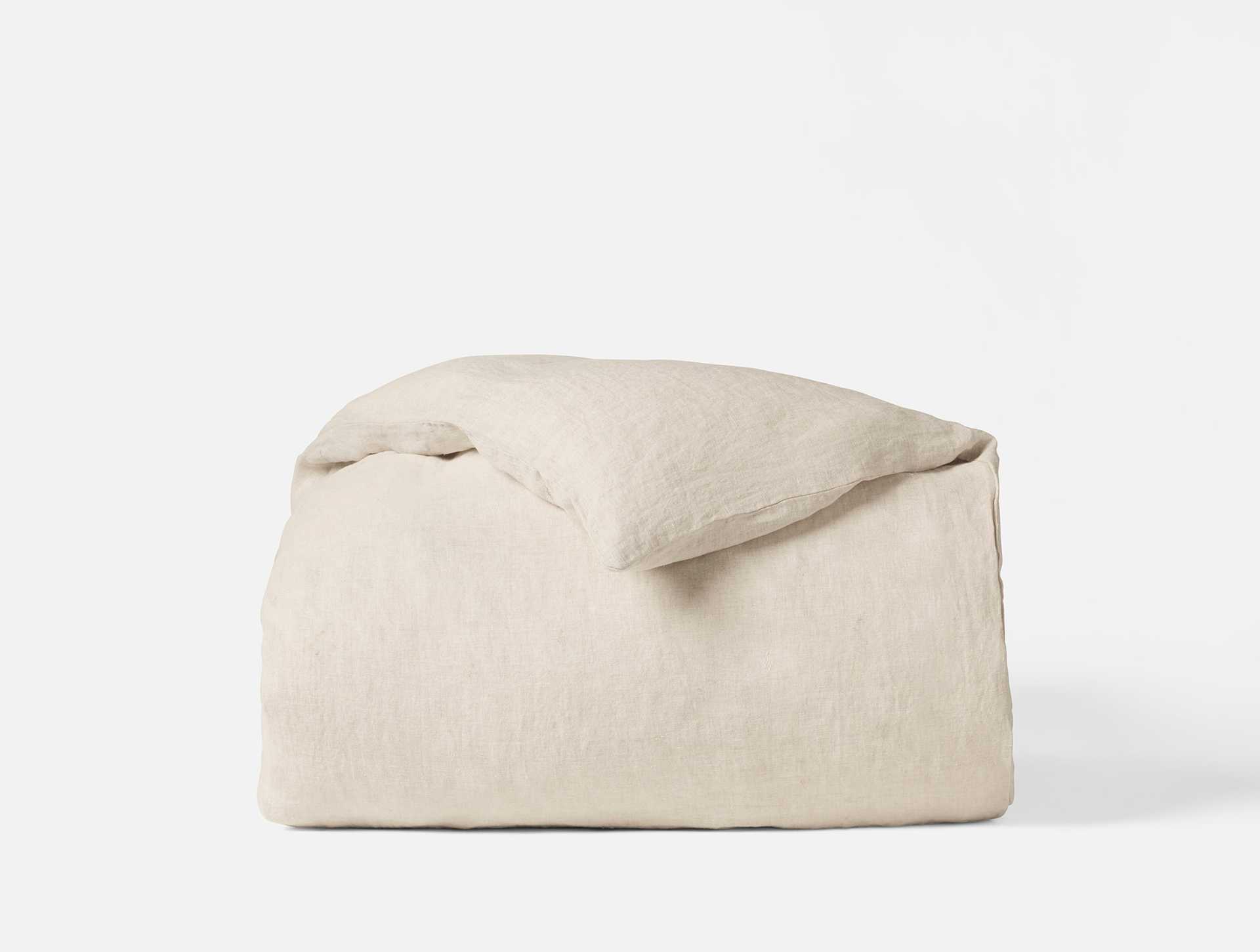
This guide explains what to examine when considering a Coyuchi duvet cover, using the Organic Relaxed Linen Duvet Cover as a specific example of the details a shopper may encounter. The aim is not to treat any one specification as a guarantee of perfect sleep. It is to show how to read the information and decide what matters in your own home.
Start with the fabric you want to live with
A duvet cover is a large surface, so its hand and appearance have an outsized effect on a bedroom. Linen is made from flax fibers. In a relaxed finish, it tends to show more natural texture than a tightly smooth fabric, and it drapes with an easy, slightly rumpled character. That texture is part of the appeal for many people; for others, a crisp, even surface feels more restful.
Think about the cover in use, not only on display. Do you enjoy bedding that looks neat and pressed, or prefer a bed that feels welcoming without much styling? Linen’s characteristic creases can suit the second preference. If you expect a flawlessly smooth bed, consider whether you are prepared to iron it—or whether a fabric that looks polished without ironing would be more satisfying.
Texture can also influence how a cover feels at first. Linen may seem more substantial or tactile than a very fine cotton sheet, although the sensation varies with weave, weight, washing and personal preference. If you have a chance to handle linen before buying, notice whether you like its surface against your hand. If you cannot, product descriptions and return terms become especially useful parts of the decision.
The Organic Relaxed Linen Duvet Cover is described as 100% organic French linen, made from flax grown in France and woven in Portugal. The listing identifies it as GOTS certified and Made Safe Certified. Those details tell you about stated material, production origin and certifications; they do not answer every question about the feel you will prefer. Treat them as useful information alongside the finish, dimensions and care instructions.
Understand what “relaxed” means for your bedroom
Terms such as “relaxed,” “washed” and “stone-washed” describe a finish or appearance, not a universal standard for softness. A relaxed finish is generally intended to give linen a lived-in look rather than a stiff, sharply pressed one. The cover’s texture may soften further with use and laundering, but the pace and precise feel depend on the fabric and how it is cared for.
Consider the relationship between the cover and the rest of the room. Linen’s subtle irregularity can pair well with plain sheets, textured blankets and natural colors. It can also bring a quieter contrast to more tailored furniture or a carefully made bed. If your sheets are already heavily textured or patterned, a simple cover may help the bed feel composed. If the room is spare, the fabric itself can add visual depth without a bold print.
Color deserves the same attention as texture. A neutral tone can be easy to layer, but “neutral” does not mean identical from one room to another: daylight, wall color and surrounding textiles change how a shade reads. Consider the color in both morning and evening light, and check whether the product description lists the exact shade you want. If coordinating a full set, confirm whether companion pieces are offered in matching or complementary colors rather than assuming they will be identical.
It helps to picture the cover with the bedding you already own. Lay out a pillowcase or sheet in a similar tone, or use a fabric swatch if one is available. A small color difference can be pleasing and intentional; a near-match that is not quite right can be more distracting. The decision is less about following a rule than choosing a palette that feels balanced in your particular room.
Check dimensions before choosing a size
Fit is one of the least glamorous parts of buying a duvet cover, but it can determine whether the bed looks settled or constantly needs adjusting. Compare the cover’s listed dimensions with the duvet insert’s measurements, not just the labels on their packaging. “Queen” and “king” are useful starting points, but sizing can vary between manufacturers and regions.
A cover that is substantially larger than its insert may leave the filling shifting inside. A cover that is too small may compress the duvet and make it harder to distribute evenly. Before ordering, check the product page for measurements and compare them with the insert at home. If the insert’s label has faded or its size is unknown, measure it flat without stretching the fabric.
Also look for any detail that could affect how the cover sits. A generous interior flap can help enclose the duvet at the opening, while ties can help anchor the insert at its corners. These features are helpful only when they correspond sensibly with the insert’s own loops or attachment points. If the insert has no loops, inside ties can still be used, but the way they secure it may differ.
When replacing only the cover, check the dimensions of the existing insert rather than assuming the old cover’s size is correct. If you are replacing both pieces, compare their measurements together. Taking a minute to do this before purchase can prevent a frustrating cycle of bunching, empty corners and repeated bed-making.
Closures and interior ties matter more than they seem
The opening determines how easily a duvet cover can be put on, removed and closed. Buttons, zippers, snaps and envelope-style flaps each have advantages. Buttons can be straightforward to use and, depending on their design, may be easier to replace than a damaged zipper. A zipper can create a continuous closure but may require careful handling. A flap may give a simple finish, though its effectiveness depends on its depth and placement.
The Coyuchi Organic Relaxed Linen Duvet Cover listing specifies coconut shell buttons, an eight-inch interior flap and inside ties. Together, those features address two separate jobs: closing the cover and helping hold the insert in place. When reviewing any product, check that the closure is described clearly and that the ties are positioned to match the duvet you own. A well-made closure should feel secure without becoming a chore at laundry time.
Interior ties can reduce the tendency of a duvet insert to drift toward one end or gather into lumps. To use them, align the insert’s corners with the cover’s corners, fasten corresponding ties if the insert has loops, and smooth the filling outward before closing the cover. If the duvet has no loops, knotting the cover ties around the insert’s corners may help, though the best method depends on the materials and construction.
Check the buttons and seams when laundering, too. Fasten the cover before washing if the care guidance recommends it, and avoid pulling sharply on the closure when turning the cover right-side out. Small habits can help preserve the fabric and hardware, especially when the cover is washed often.
Read the care instructions as part of the purchase
A duvet cover will be washed. That is not an afterthought; it is part of its life. Before choosing one, make sure the recommended care fits your routine. A cover that calls for a gentle cycle and low-heat drying may be easy enough for one household and inconvenient for another. The important point is to understand the instructions before the first wash rather than after a stain or shrinkage problem.
The Organic Relaxed Linen Duvet Cover is listed with care instructions to machine wash cold on a gentle cycle with like colors, tumble dry low and warm iron if desired. The product information also describes the linen as softening with use. Follow the current care label supplied with the item, since that is the most direct guidance for the specific product you receive.
In general, avoid overloading the washing machine. Bedding needs room to move through water and rinse thoroughly. Use detergent suited to the fabric and the load, and be cautious with bleach or harsh treatments unless the care label specifically permits them. If the cover is a deep or saturated color, washing it separately the first time may be prudent, particularly when the manufacturer recommends it.
Drying also affects feel and appearance. High heat can be hard on fibers and closures, while taking linen out promptly may reduce deep creasing. Some people prefer a lightly rumpled finish and skip ironing; others use a warm iron for a more tailored look. The product instructions allow warm ironing if desired, so the choice can reflect the style you want rather than a compulsory step.
Before washing, check for loose threads, fasten the closure if appropriate and turn the cover according to the care directions. After washing, make sure it is fully dry before storing or putting it back on the duvet. These steps are simple, but they help keep the cover ready for regular use.
Consider fiber claims and certifications carefully
Material descriptions can help distinguish a natural-fiber cover from a blend, but the details should be read precisely. “Linen” refers to fabric made from flax fibers; “organic linen” indicates a claim about how the flax was produced and processed under the relevant standard. Look for the exact fiber composition, the named certification and, where provided, the place of growing, weaving or finishing.
Certifications are most useful when shoppers understand what they do and do not establish. The product listing identifies the Organic Relaxed Linen Duvet Cover as GOTS certified and Made Safe Certified. Those labels can provide additional context about standards and product attributes, but they should not be treated as a substitute for checking the actual product specifications, care requirements or your own sensitivities.
Origin statements also describe different stages. Flax may be grown in one country, yarn or fabric processed elsewhere, and the finished item made in another location. In this case, the listing describes French-grown flax and weaving in Portugal. That is more informative than a vague origin claim, while still leaving room for shoppers to consult the full product details if they want to understand more about the supply chain.
For people with sensitive skin or allergies, no fabric description can guarantee an individual response. Consider any known sensitivities, wash new bedding before use if that is part of your routine, and consult the manufacturer for questions about dyes or finishing agents. Material and certification information can guide a decision; personal comfort remains personal.
Balance appearance with everyday use
A duvet cover should work at the scale of a whole room and at the scale of a normal Tuesday morning. A beautiful fabric that is difficult to wash may not suit a busy household. A very simple cover may be ideal if you like changing the room with pillows and throws. A textured linen cover can be a strong foundation if you want the bedding itself to contribute warmth and character.
Think about who uses the bed and how often the cover needs washing. A guest room that sees occasional use presents different demands from a primary bed, a child’s room or a home with pets. In a frequently used space, durable construction and straightforward laundering may matter more than a delicate finish. Check the product description for seam construction and fastening details, and seek clarification if a feature important to you is not stated.
Also consider whether you want a complete bedding set or prefer to build a mix over time. A duvet cover does not need to match every sheet and pillowcase exactly. Coordinating shades, complementary textures and a repeated accent color can create a coherent arrangement without making the room feel overly coordinated. Keeping the cover’s care needs compatible with the rest of the bedding can make laundry simpler.
A practical checklist before you buy
Before committing to a Coyuchi duvet cover—or any linen duvet cover—pause over a few concrete questions:
- Do you like the fabric’s character? Decide whether you want linen’s natural texture and relaxed drape or a smoother finish.
- Are the dimensions compatible? Compare the cover’s measurements with the actual duvet insert.
- How does it close? Check the closure type, flap depth and whether the design includes interior ties.
- Can you follow the care instructions? Note water temperature, cycle, drying method and ironing guidance.
- Are the material and origin details clear? Read the fiber composition, stated growing and weaving locations, and named certifications.
- Will the color work at home? Consider the room’s light and the sheets, pillows and throws you already own.
- What is included? Confirm whether the listing is for one duvet cover, a set, or additional bedding pieces.
- What happens if the fit or feel is wrong? Review current return and exchange terms before ordering.
This checklist is deliberately practical. It shifts the decision from brand recognition alone to the qualities you will encounter after the package is opened: a fabric’s feel, a closure’s convenience, a cover’s fit and the rhythm of its care.
The bottom line
A duvet cover is both a textile and a daily-use object. It shapes the bed’s appearance, meets the sleeper night after night and returns to the washing machine again and again. When weighing a Coyuchi duvet cover, the most useful questions are not simply whether linen is fashionable or whether a label sounds reassuring. They are whether the fabric suits your preferences, the size matches your insert, the construction keeps the duvet in place, and the care instructions fit your life.
The Organic Relaxed Linen Duvet Cover provides a clear example of the specifications to compare: organic French linen, woven in Portugal, an eight-inch interior flap, coconut shell buttons, inside ties and cold, gentle machine-wash guidance. Those details may suit someone looking for a breathable, textured linen layer with a relaxed finish. They may be less compelling to a shopper who wants a smooth, sharply pressed surface or different laundering requirements.
Make the choice with both the bed and the laundry basket in mind. When a cover feels right, fits properly and can be cared for without fuss, it becomes more than a decorative layer. It becomes part of the quiet routine that makes a bedroom feel like a place to return to.