Bedding & Bedroom Style
A Guide to Layering Decorative Pillows with Linen Bedding
A few well-chosen pillows can bring color, texture, and definition to a linen bed. The secret is not piling on more, but creating a thoughtful arrangement that feels inviting at night and composed by day.
Published October 27, 2026
Linen has a way of making a bedroom feel finished without looking overly arranged. Its softly irregular surface catches the light, its folds seem to settle where they please, and its natural drape gives even a neatly made bed a little ease. Decorative pillows can build on that character—but they can also overwhelm it. The difference comes down to proportion, texture, color, and the practical question of where all those pillows go when it is time to sleep.
Think of pillow styling as editing rather than accumulating. Begin with the pillows you actually use, then add one or two decorative covers that make sense with the bedding. A restrained arrangement lets linen remain the main event: tactile, relaxed, and quietly expressive. A considered mix of shapes and finishes adds dimension without turning the bed into a display that must be dismantled every night.
This guide walks through a dependable method for layering decorative pillows with linen bedding, from choosing a palette to caring for the pieces you bring into the room. The aim is a bed that looks inviting but still belongs to the people who sleep in it.
Start with the practical foundation
Sleeping pillows are the working layer. Place them first, in the number and size you use every night. Standard, queen, or king pillows should suit both the bed and the sleeper; a decorative scheme cannot compensate for a foundation that is uncomfortable or awkwardly sized. Once these are in place, you can see how much room remains for styling.
For a simple arrangement, stand sleeping pillows against the headboard or lay them flat, depending on the look you prefer. A tall upholstered headboard can support an upright row, while a low or minimally framed bed may feel better with pillows laid down. The bed’s width matters, too. On a queen bed, a small number of carefully scaled pillows often looks calmer than a crowded lineup. A king bed can accommodate a wider composition, but it does not require one.
Next, add the decorative layer. One or two covers are often enough to create a focal point. A square pillow can provide a clear central accent; a lumbar pillow adds a horizontal line and can bridge the space between larger pillows. If you are unsure, begin with a single accent cover. Live with the arrangement for a few days before deciding whether it needs anything else.
That pause is useful. Pillow styling is judged from more than one angle: from the doorway, from the side of the bed, and from the pillow’s point of view when someone wants to sit down. If the arrangement looks polished but leaves little room to rest, it is too elaborate for everyday use.
Use size and shape to create dimension
Variation gives a layered bed its structure. When every pillow is the same size and shape, the arrangement can read as a flat row. Different proportions create a gentle sense of depth: larger sleeping pillows toward the back, smaller decorative pillows in front, and a lumbar shape as an optional finishing piece.
For a classic setup, place two sleeping pillows side by side and add a square decorative cover in front of them. For a more tailored look, use a pair of smaller decorative pillows, one on each side. A lumbar pillow can sit across the center, but it is not essential; it works best when its scale relates to the width of the bed rather than appearing as an isolated stripe.
Consider height as well as width. A very tall accent pillow can obscure the headboard or dominate a low bed. A compact square may disappear against a large arrangement. The useful question is not whether a pillow is fashionable, but whether it adds a distinct shape to the composition. Each piece should have a reason to be there.
For a relaxed result, avoid making both sides perfectly identical unless symmetry is part of the room’s design. Two matching sleeping pillows can provide balance, while a single decorative accent introduces a natural focal point. Alternatively, a pair of identical covers gives a more formal, orderly effect. Neither approach is inherently better; the room’s architecture and the desired mood should guide the choice.
Before buying inserts or covers, check dimensions carefully. A decorative cover may be sold separately from its insert, and the insert size influences the final shape. A properly fitted insert helps a cover look full without pulling at seams. For a softer, less structured appearance, choose an insert that fills the cover comfortably but does not force its corners into sharp points.
Let texture do some of the work
Linen’s appeal is tactile. Its surface is not perfectly smooth, and that slight variation is part of its visual character. Decorative pillows can echo that texture or introduce a contrast. The most successful combinations usually do a little of both: a linen-on-linen pairing creates continuity, while a distinct weave, embroidery, or trim gives the eye somewhere to land.
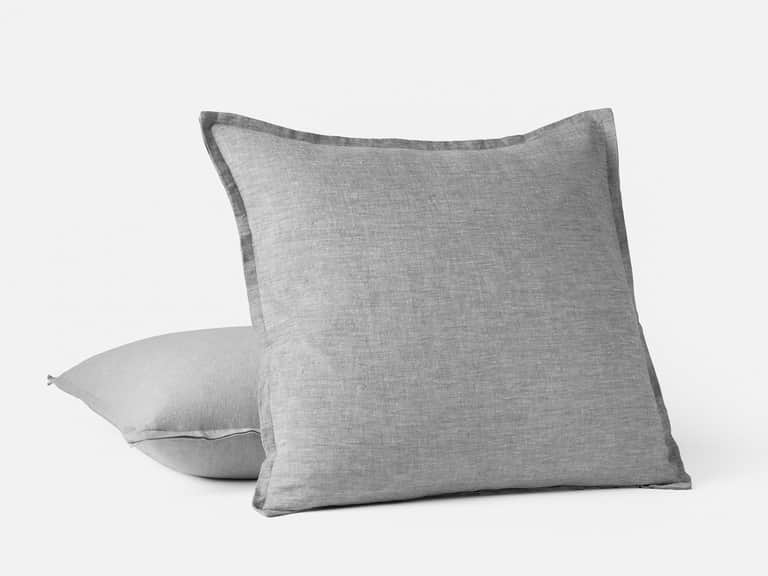
Solid linen covers are a dependable choice when the bedding already has visible detail. A washed finish adds soft ripples and a lived-in hand, making it feel related to relaxed sheets or a duvet cover. A decorative cover such as Organic Relaxed Linen Decorative Pillow Cover offers a straightforward way to carry the natural texture of linen from the bed into the accent layer. Its understated surface can work with patterned bedding or with a nearly monochrome scheme.
Embroidery and trim can provide a more pronounced focal point. A stitched motif, narrow border, or lace edge introduces detail without requiring a bold color. If the duvet cover has its own decoration—such as lace, hemstitch, or an embroidered pattern—choose pillows that either repeat one element or deliberately simplify the composition. Repeating every detail can make the bed feel overly coordinated; introducing too many different details can make it feel unsettled.
Texture is also a way to create contrast while keeping the palette calm. Pairing a smooth cotton surface with linen, or combining a plain linen cover with a subtly embroidered one, can make a neutral bed feel layered without adding strong color. The contrast should be visible at a glance but comfortable up close. A bedroom is not a showroom; the materials should feel good in use.
Pay attention to how the textures behave together. Linen’s relaxed drape tends to soften sharp edges, while a crisp, tightly woven cover can add definition. A heavily embellished pillow may be beautiful but less comfortable against the body. Keep the most decorative piece where it can be appreciated without becoming an obstacle to sitting or sleeping.
Build a calm color palette
A limited palette gives mixed textures room to breathe. Start with the main bedding color, then choose one or two related tones for the accent pillows. White, ivory, sand, flax, and muted gray create a quiet foundation. Olive, slate, blue, or a softened terracotta can add character without disrupting the natural feel of linen.
One practical method is to borrow a color already present in the room. A pillow can pick up the tone of a rug, curtain, bedside lamp, or artwork, helping the bed feel connected to its surroundings. It does not need to match exactly. A related shade often looks more considered than a precise color match, which can make the room feel overly coordinated.
Another method is to stay within one color family and vary its depth. Pale natural linen, a mid-tone accent, and a darker pillow can create a gentle progression. This is especially effective when the bedding is simple and the room needs a little definition. If you want a single stronger color, keep it to one accent and let the rest of the arrangement remain quiet.
Pattern deserves similar restraint. A small-scale motif can sit comfortably with plain linen, while a large or high-contrast print may become the dominant feature. If the duvet already carries a pattern, choose decorative pillows with simpler surfaces. If the bedding is solid, one patterned or embroidered cover can create interest. The principle is not to eliminate variety but to give it a hierarchy.
Light changes color, so assess the palette in the room where it will be used. A fabric that appears warm in a shop may look cooler beside a north-facing window or under a different lamp. If possible, compare colors against the bedding in both daylight and evening light before committing to a full set of accents.
Three arrangements to try
There is no single correct formula for pillow styling, but a few starting points make decisions easier. Adapt them to your bed size, headboard, and habits rather than following them as rules.
- The pared-back bed: Arrange your sleeping pillows neatly and add one square decorative cover in front. Keep the colors close, then let the difference in weave or finish supply the detail.
- The balanced pair: Use sleeping pillows as the base, followed by two smaller decorative covers. Choose matching covers for a symmetrical look, or use two related textures in the same color family for a softer, less formal effect.
- The relaxed layered look: Place sleeping pillows at the back, add one square accent, and finish with a lumbar pillow. Keep the colors connected and the patterns limited so the variety of shapes feels intentional rather than busy.
These arrangements can be scaled up or down. In a small room, one accent may be enough. In a spacious bedroom with a broad headboard, a balanced pair can better fill the visual width. What matters is proportion: pillows should relate to the bed, not simply to one another.
Try the arrangement without buying anything new. Move covers from another room, fold a throw at the foot of the bed, or remove one pillow to see what changes. Editing is often more effective than adding. If the bed feels crowded, take away the least useful piece first.
Keep comfort and care in the picture
Decorative pillows are part of a working bedroom, so laundering and storage deserve a place in the decision. Covers that can be removed easily are simpler to refresh than fixed decorative pieces. If a cover is intended for regular use, read its care instructions before mixing it with bedding that follows a different wash routine.
Linen is generally appreciated for its breathable feel and for the way it softens with use, but individual products may have different finishes and care requirements. Many relaxed linen covers call for a gentle wash, like colors, and low tumble drying; some may benefit from a warm iron, while others are meant to retain their natural creases. Follow the label for the specific item rather than assuming all linen behaves identically.
Keep an eye on inserts as well as covers. If the cover is washable but the insert is not, separate them before laundering and make sure the cover is completely dry before putting it back on. Periodically air decorative pillows and rotate them to help distribute wear. Everyday use, sunlight, and frequent washing can affect color and texture over time.
A simple evening routine can also keep the bedroom practical. Place decorative pillows in a basket, on a bench, or on a chair rather than stacking them on the floor. If there is nowhere convenient to put them, that may be a sign the arrangement includes more pieces than the room can comfortably support.
For sensitive sleepers, keep decorative fabrics away from the face and choose materials that can be cleaned according to household needs. Labels and certifications can help explain how a particular textile was produced, but they do not replace proper care or guarantee a fit for every person. Comfort is personal, and the most attractive pillow is not necessarily the most useful one.
A few common mistakes to avoid
The first is treating every available surface as an invitation to add another pillow. Excess can obscure the bedding, crowd the headboard, and make the bed feel like a task each morning and evening. A clear focal point is stronger than a collection of competing accents.
The second is choosing decorative covers without considering what they sit beside. A pillow may look appealing on its own but clash with the bedding’s scale, color temperature, or finish. Compare it directly with the duvet and sheets, not only with a screen or a small color swatch.
The third is overlooking the way an arrangement will be used. A row of large, firm accents may look balanced during the day but can be cumbersome at bedtime. If the room is designed for reading or lounging, prioritize support and comfort. If the bed is primarily for sleep, keep the decorative layer easy to remove.
Finally, do not mistake perfect symmetry for good design. Symmetry can be restful, but it is only one option. A single accent pillow, an off-center lumbar, or a subtle mix of related covers can feel more natural when the rest of the room is relaxed. Let the arrangement reflect the room rather than an abstract rule.
The finishing touch should feel like you
A linen bed does not need to look immaculate to feel considered. Its character comes partly from the weave, the gentle creases, and the way the fabric settles over time. Decorative pillows should support that atmosphere—not erase it. Start with the sleeping layer, add a small number of accents, and give each piece a clear role in the composition.
When the arrangement feels too formal, relax the symmetry or choose softer textures. When it feels busy, reduce the number of colors or remove a pillow. When it feels flat, vary the size or introduce one distinct finish. Small adjustments can change the whole bed without requiring a new set of bedding.
The best pillow styling is both visible and forgettable: it gives the room shape, then gets out of the way. A calm palette, a little variation in texture, and enough space to sleep are usually all a linen bed needs.
A quick checklist for layering decorative pillows
- Arrange the pillows you sleep on before choosing accents.
- Limit the decorative layer to one or two pieces to start.
- Vary shape or scale, but keep the palette connected.
- Use texture, stitching, or embroidery for interest without overloading the colors.
- Check cover and insert dimensions, and read care instructions.
- Make sure there is a convenient place to put decorative pillows at night.